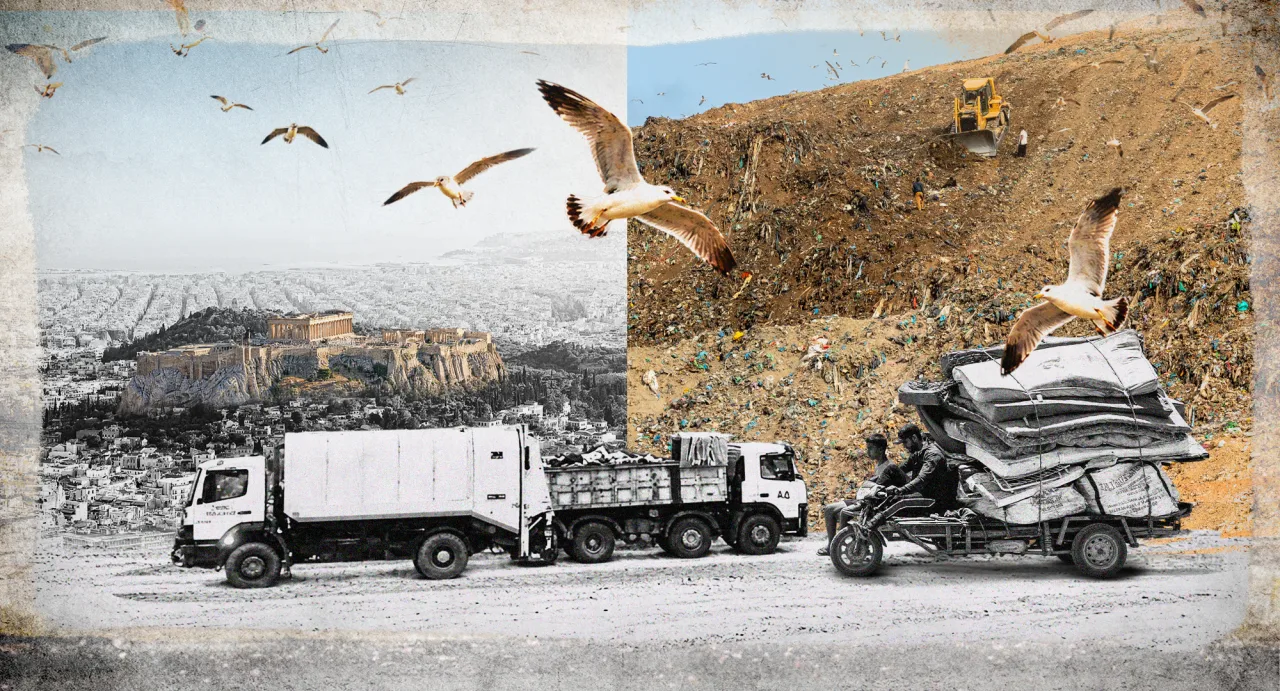
The Fyli landfill, located in the north‑western suburbs of Athens, remains the city’s only waste disposal site even as authorities have extended its operation into 2027. The sprawling mound of compacted garbage, often described as an “invisible mountain”, covers nearly 300 football pitches and rises to 200 metres in places.
Every day, about 600 trucks deliver roughly 5,000 tonnes of municipal waste to the site, a volume that dwarfs the lift‑off weight of the Saturn V rocket. The landfill receives the bulk of Attica’s waste, with only 7.5% recycled and 90% buried. The surrounding area, known as Western Attica, hosts heavy industries such as oil refineries and shipyards, and the landfill’s proximity has been linked to the region’s highest cancer mortality rates.
Groundwater beneath the landfill has been contaminated for decades with heavy metals and toxins, while the site frequently catches fire during summer, releasing noxious fumes. Stray dogs roam the slopes, and small groups of waste‑pickers—many from nearby Roma settlements—scour the piles for scrap metal. The area’s smell of rot is pervasive, and the landfill’s impact on local air quality has raised serious public‑health concerns.
The landfill’s history is marked by repeated incidents. In 2003 a fissure opened, causing 800,000 cubic metres of waste to collapse down the slope. A fatal accident in 2011 led to the site being sealed at dusk, and a 2014 European Parliament committee warned that only drastic action could prevent future environmental catastrophe. Greek Prime Minister Kyriakos Mitsotakis declared the site a “health time bomb” in 2019, yet the landfill remains open.
Drivers like Sotiris, who has operated the garbage truck for 25 years, describe the daily journey to the dump as a “Calvary”. The steep, uneven tracks can disappear under fresh layers of waste, and wet weather turns the slopes into treacherous, ice‑like surfaces. The risk of skidding or overturning is a constant threat to the crew.
Local residents, numbering around 50,000, and activists such as the Western Front pressure group, have long campaigned for the landfill’s closure. Teacher Christos Kourniotis notes that waste can be both a source of profit and a source of death. Thomas Bizas, a retired municipal worker and former union leader, recalls being arrested during a protest in the early 1980s and has continued to push for change.
With no alternative disposal site in sight and the landfill already at capacity, authorities face a dilemma: keep the site open for the convenience of waste transport or find a new destination to protect public health. The continued operation of Fyli underscores a broader issue of institutional inertia in Greece’s waste‑management system.


